
The energy transition and electrification could profoundly transform global metals markets. Faced with sharply rising demand and an increasingly constrained supply, copper, nickel and aluminum are expected to experience structural shortages by 2035, paving the way for a new bull market in metal prices.
Industrial metals are entering a new phase. The energy transition is creating significant new demand, whilst supply is becoming increasingly unresponsive.
This combination could put sustained pressure on copper, nickel and aluminum and usher in a new bull market for metal prices.
said Simon LACOUME, metals sector economist at Coface.
Demand is accelerating because of the energy transition
Even before the rise of low-carbon technologies, demand for metals was already underpinned by robust structural trends. Urbanization, infrastructure and the growth of emerging economies will continue to drive global consumption over the coming years. The construction sector accounts for nearly 50% of global steel consumption, whilst electrification already accounts for nearly three-quarters of global copper demand.
But this long-standing demand is now being supplemented by that driven by the energy transition and digitalization. Renewable energy, electric vehicles, batteries, electricity grids and data centers are particularly metal-intensive. According to the IEA’s1 APS2 scenario, clean technologies could account for 35% of global demand for copper and nickel by 2035.
Why supply is struggling to keep up
Faced with this acceleration, supply is struggling to keep up. Fewer than 1% of mineral exploration projects result in an operational mine, and the development of new capacity at existing projects can take nearly 20 years on average (compared with less than 15 years in the early 2000s). Low returns on investment, declining ore grades in deposits and rising costs also limit producers’ ability to increase output rapidly.
Added to this is a high degree of geographical concentration in supply chains. Indonesia accounts for 67% of global nickel ore production, whilst China holds more than half of the world’s refining capacity for several metals.
Finally, trade restrictions are on the rise: 1,138 measures affecting the import or export of critical minerals were in force by the end of 2025, compared with 357 ten years earlier.
Copper, nickel, aluminum: structural shortages by 2035
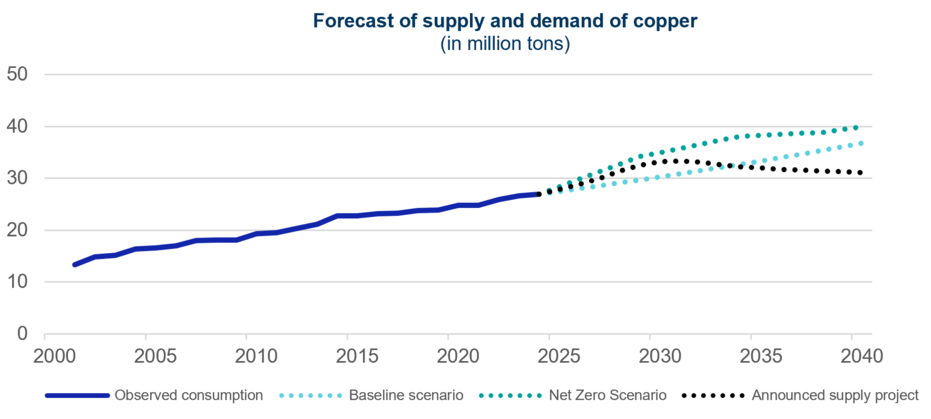
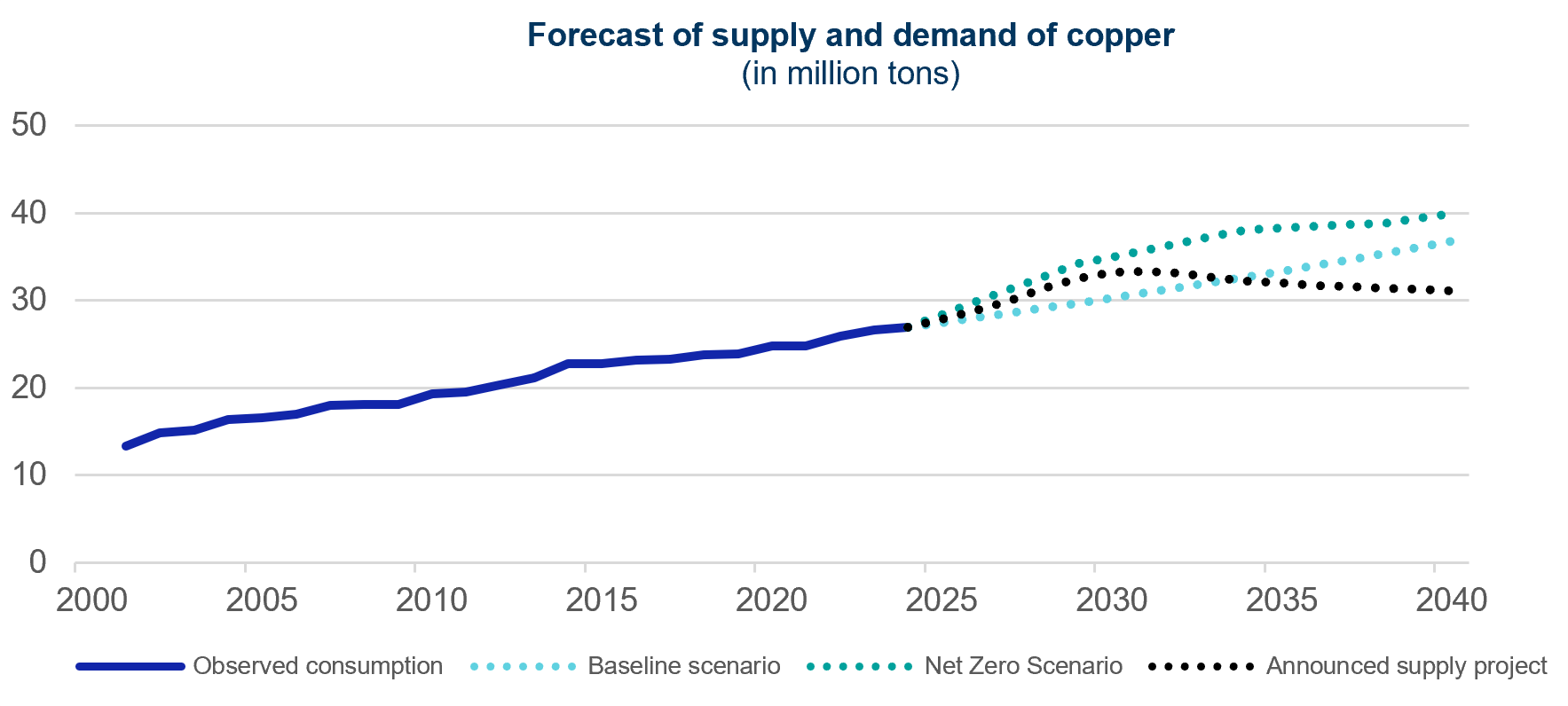
The imbalance between supply and demand is expected to be particularly pronounced for metals that are essential to the energy transition. For aluminum, copper and nickel, demand will grow faster than supply over the next decade, even without any further acceleration in decarbonization. However, not all of these metals are affected in the same way.
Data used for the graph in .xlsx format
Copper, which is essential for the electrification of economies and the development of digital infrastructure, could face a shortfall of between 1.5 and 6.5 million tons by 2035 (depending on the scenario), potentially reaching 17% of global demand in a Net Zero Emission scenario. The boom in data centers could further exacerbate these pressures.
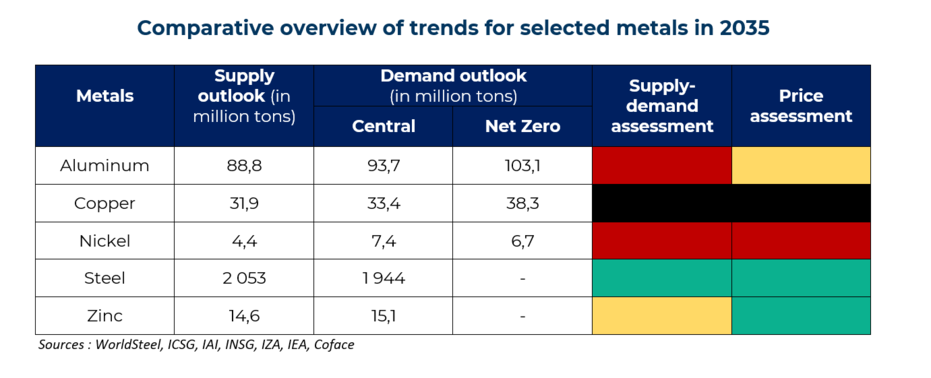
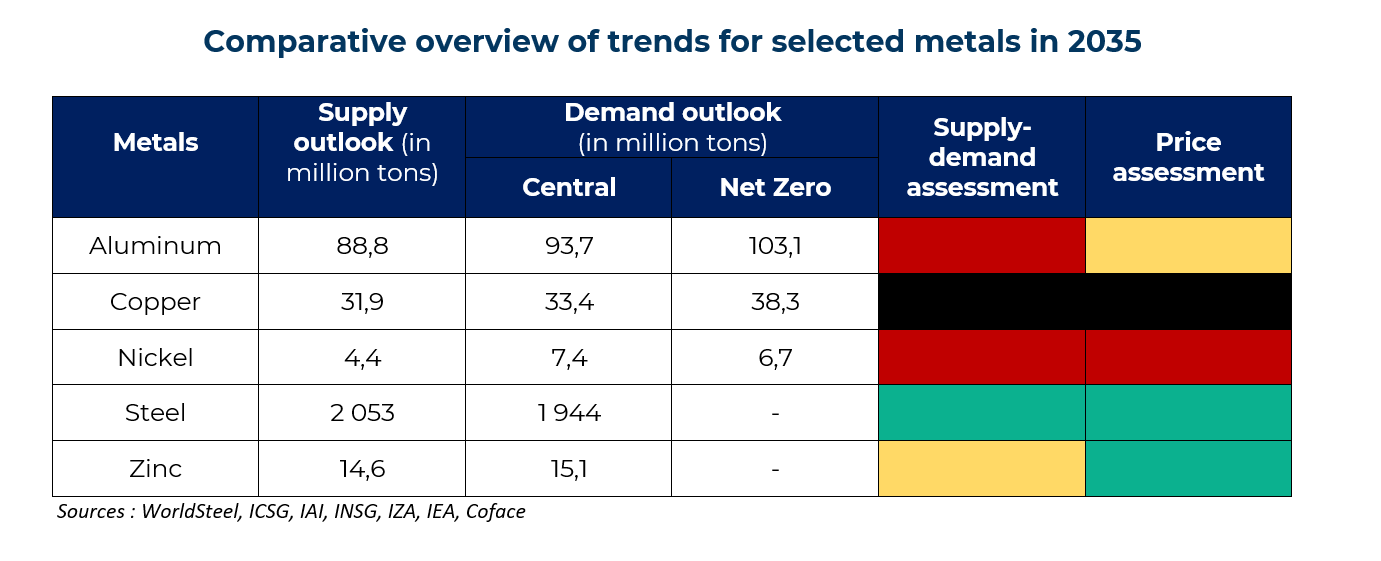
Nickel appears to be the metal most affected by the energy transition, driven by batteries and electric mobility. In a Net Zero scenario, the refined nickel market could face a shortfall of around 6.5 million tons by 2035, representing nearly 35%of projected demand.
The aluminum market is also expected to become tighter. The shortfall could reach 5 to 15 million tons, representing around 10% of projected demand. In this case, the constraint stems less from the availability of resources than from industrial capacity, the necessary investment and access to competitively priced electricity.
Towards a new bull market for metals
These tensions are expected to exert sustained pressure on prices. Coface forecasts that copper and nickel prices could almost double over the next decade, whilst aluminum is also expected to see a sharp rise. Conversely, steel and zinc appear less vulnerable, with less constrained supply conditions and more limited exposure to the new demands associated with the energy transition.
Data used for the graph in .xlsx format
For manufacturers, the challenge will therefore gradually extend beyond price alone: securing access to critical metals, developing recycling and reducing material intensity could become key factors in competitiveness.
> Discover our Metals Sector analysis
Reach out Coface UAE now to get detailed information about our products and grow your business safely!
1 International Energy Agency
2 Announced Pledges Scenario


